fbpx

+ (65) 90615844 

Mon – Fri: 9:00AM – 5:00PM

hello@blendedconcept.com

C.A.R.E. Certificate Programme

 Compassion And Respect for Everyone

Ready to Make a Difference but Not Sure How?

With C.A.R.E, You will Learn Skills to:

Programme Aim

Upon completion, you’ll be adept at providing emotional, social, and psychological support with empathy and cultural sensitivity. You’ll be prepared to help or engage effectively with a diverse range of individuals, upholding ethical standards and fostering positive change.

Programme Outcomes

  • Apply micro-counselling skills to engage and sustain empathic conversations
  • Demonstrate cultural sensitivity and adaptability to work with diverse groups of people
  • Maintain ethical standards and boundaries in the helping relationship
  • Demonstrate congruence with personal values and practice self-reflexivity skills to make sense of experiences in the helping journey

Module Description

Core Modules

Para-Counselling (Basic)

16 hours

Unlock Your Inner Excellence

16 hours

Understanding the Social Landscape

16 hours

Understanding the Social Landscape

4 hours

Elective Modules

Motivational Interviewing

20 hours

Coaching Young People for Positive Difference

16 hours

Coaching and Counselling for Mental Wellness

20 hours

Para-counselling (Advance)

20 hours

Mentoring for Youth

20 hours

Mindfulness-Based Stress Reduction

16 hours

C.A.R.E Schedule

Run

Module

Schedule

Run 1

Module 1 - Unlock you Inner Excellence

Module 2 - Para-counselling (Basic)

Module 3 - Working with Diverse People

Module 4 - Understanding Social Landscape (Self-directed eLearning)

Module 5 - Elective

29, 30 May 24

11, 12 May 24

10, 11 Jun 24

1 Jun 24

Complete by Jul 24

Run 2

Module 1 - Unlock you Inner Excellence

Module 2 - Para-counselling (Basic)

Module 3 - Working with Diverse People

Module 4 - Understanding Social Landscape (Self-directed eLearning)

Module 5 - Elective


24, 26 Jun 24

1, 2 Jun 24

15, 16 Jul 24

1 Jul 24

Complete by Aug 24


Run 3

Module 1 - Unlock you Inner Excellence

Module 2 - Para-counselling (Basic)

Module 3 - Working with Diverse People

Module 4 - Understanding Social Landscape (Self-directed eLearning)

Module 5 - Elective

17, 18 Jul 24

6, 7 Jul 24

12, 13 Aug 24

1 Aug 24

Complete by Sep 24

Check Out Our Electives

We offer a plethora of complimentary electives for you to choose from.

Connect with us​

Email: hello@blendedconcept.com
Phone: + 65 94873063
MON-FRI 09:00 - 19:00
Para-counselling (Basic)

Learning Mode: Face-to-face or Online (In agreement with agency)

Durations: 16 hours

Course Description

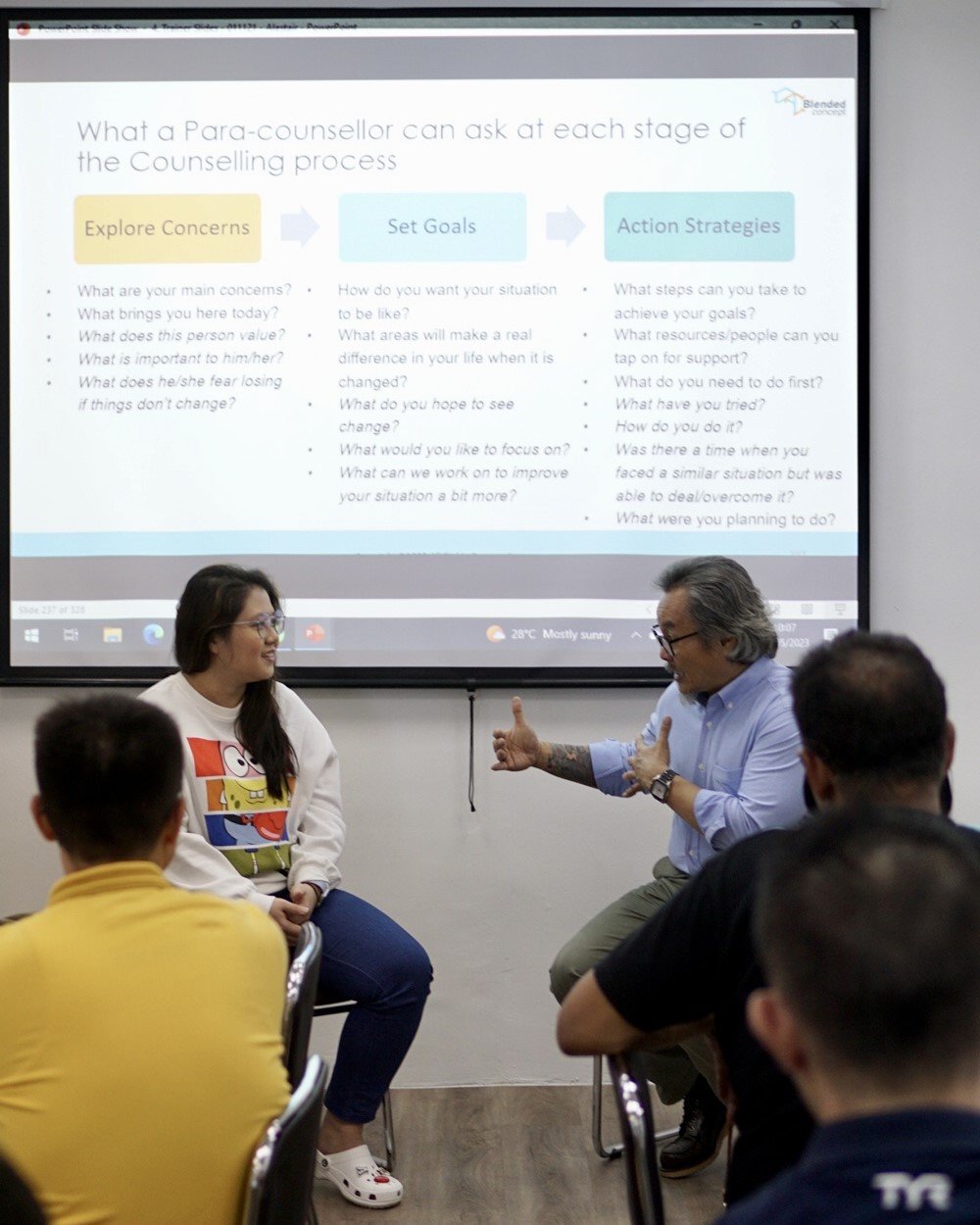
This course helps learners develop micro-counselling skills to demonstrate empathy and engage in purposeful conversations that drive change.

What You Will Acquire 

  • Apply micro-counselling skills to engage and sustain empathic conversations.
  • Apply practical skills to tip the conversations towards change without increasing resistance
  • Maintain ethical standards and boundaries when in a helping relationship


Unlock Your Inner Excellence: A Self-Discovery Journey for Achieving Personal and Professional Mastery
Reflective-practice

Learning Mode: Face-to-Face or Online (In agreement with agency)

Durations: 16 hours

Course Description

This course helps learners re-discover their internal passion for volunteering and turn passion into intrinsic motivation for long-term sustainability.

What You Will Acquire 

  • Rediscover your passion for helping others.
  • Overcome self-limiting beliefs and doubts.
  • Build resilience and align your volunteering efforts with your personal values.
Working with Diverse People: Cultural and Social Sensitivity in the Helping Process

Learning Mode: Face-to-Face or Online (In agreement with agency)

Durations: 16 hours

Course Description

This course aims to empower volunteers with the knowledge, skills, and attitudes necessary to work effectively with diverse populations and promote inclusive practices in the helping process.

What You Will Acquire 

  • Recognize and appreciate the importance of culturaldiversity in the helping process.
  • Understand own cultural biases and how these biases mayinfluence their interactions with diverse populations.
  • Demonstrate empathy and respect for individuals fromdifferent cultural backgrounds.
Understanding the Social Landscape

Learning Mode: Self-Directed E-Learning

Durations: 4 hours

Course Description

This course helps learners gain a comprehensive understanding of the volunteering landscape, including its scope, and management.

What You Will Acquire 

  • Define volunteering and understand its significance in social services
  • Recognize the diverse forms and settings of volunteering, including traditional and virtual volunteering opportunities.
  • Understand the benefits of volunteering for individuals, communities, and society as a whole.
  • Identify the current trends and challenges in the volunteering landscape.
Para-counselling (Basic)
Motivational Interviewing

Learning Mode: Face-to-Face or Online (In agreement with agency)

Durations: 20 hours

Course Description

The MI approach teaches you how to explore and strengthen a person’s own reasons for change, while also demonstrating an appreciation of the challenges they face. It is a collaborative conversation style, much like a dance rather than a wrestling match. By adopting the MI approach, you can build supportive relationships with your loved ones/clients and evoke their intrinsic motivations for long lasting change.

What You Will Acquire 

  • Make sense of what is happening in a conversation when talking to someone about change
  • Draw out the person’s own motivation for change and reinforce desire to change
  • Apply practical skills to tip the conversations towards change without increasing resistance


Coaching Young People For Positive Difference
Youth coaching blended concept

Learning Mode: Face-to-Face or Online (In agreement with agency)

Durations: 16 hours

Course Description

The youth of today don’t like to be TOLD. They want to be COACHED. Learn how coaching can draw out the potential in youth.

What You Will Acquire 

  • Recognise the role of coaching for young people development and performance
  • Establish trust and build coaching relationships
  • Apply psychosocial principles and practices to understand the inner world of youths today
  • Apply coaching techniques to help young people understand and clarify their views, learn how to reach self-determined goals, and resolve emotional or interpersonal problems


Coaching and Counselling Techniques to Build Mental Wellness and Resilience
blended concept training

Learning Mode: Face-to-Face or Online 

Durations: 20 hours

Course Description

By the end of the course, you’ll be equipped with the practical skills and strategies you need to promote positive mental health and well-being in your clients. Whether you’re a seasoned professional or just starting in the field, this course will help you take your coaching and counselling skills to the next level. 

What You Will Acquire 

  •  Understand the principles of mental wellness and resilience
  • Learn coaching and counselling techniques for building mental wellness and resilience
  • Gain knowledge on psychological first aid and how to support individuals in distress
  • Develop strategies for promoting positive mental health and well-being


Para-Counselling (Advance)

Learning Mode: Face-to-Face

Durations: 20 hours

Course Description

This Advanced Para-counselling course integrates essential counselling engagement skills into a structured helping process. Learners will understand various counselling theories and apply effective techniques to help clients achieve life-enhancing outcomes more intentionally.

What You Will Acquire 

  • Apply the Egan’s model for purposeful and outcome-focused client-engagement 
  • Apply probing techniques to uncover client’s story and determine underlying issues sustaining problems
  • Utilise counselling theories and techniques to guide interactions with client
  • Understand the basics of counselling theories, therapies, and techniques, including Psychodynamic Therapy, Person-Centred Therapy, Cognitive-behavioural Therapy, Motivational Interviewing, Solution-focused Brief Therapy and Person-in-Environment Approach
  •  
Mentoring for Youth

Learning Mode: Face-to-Face or Online 

Durations: 20 hours

Course Description

Mentoring youths can be a direct, yet complex and dynamic process. Having helping skills is not enough. To be effective mentors, it is important to understand youths’ worldviews and appreciate the functions of youths’ behaviours within their life experiences.


Uncover why youths engage in such behaviours and learn how to select appropriate mentoring approaches based on their needs. Be equipped to engage youths and inspire them towards greater heights in life. 

What You Will Acquire 

  • Analyse the needs of youths to determine mentoring approaches
  • Establish trust and build mentoring relationships
  • Apply principles and practices of youth mentoring when working with youths
  • Apply techniques to help youths understand and clarify their views, learn how to reach self-determined goals, and resolve emotional or interpersonal problems
  • Building supportive environment for youths to explore change
  • Monitor mentoring development


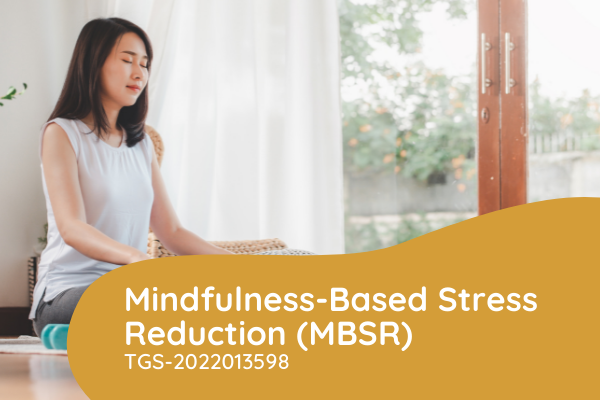
Mindfulness-Based Stress Reduction
MBSR blended concept

Learning Mode: Face-to-Face and Online 

Durations: 16 hours

Course Description

The programme adopts mindfulness-based strategies and practices to cultivate a mindset of openness, acceptance, and self-compassion. It will equip you with the skills to distinguish between your thoughts and your reality in the “here and now”. 

Ultimately, the aim of MBSR is to help you sharpen your sense of being, with which, can allow you to make wiser choices and develop thinking styles, behaviors and habits that are conducive to stress reduction and prevention, and to leading life more fully.

What You Will Acquire 

  • Understand the difference between stressors and stress, consequences of stress, and different ways of reacting towards stressors;
  • Learning both informal and formal mindfulness practices
  • Learn about what mindfulness is, including the relevance of attention, intention, and attitudes of mindfulness
  • Experience a variety of formal and informal mindfulness practices to increase awareness and reduce and prevent stress
  • Develop a personal practice of mindfulness